
Great Zimbabwe
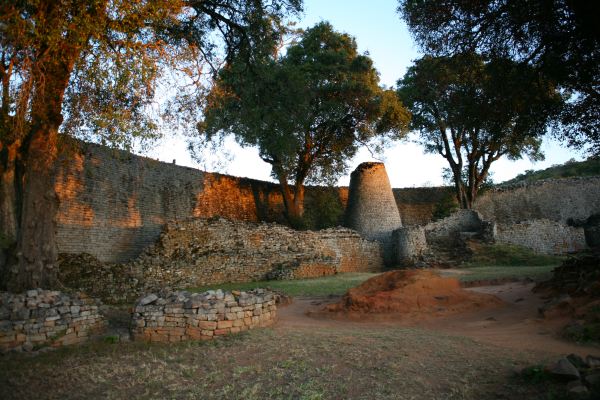
Great Zimbabwe is a ruined city in the south-eastern hills of Zimbabwe near Lake Mutrikwe and the town of Masvingo. It was the capital of the Kingdom of Zimbabwe during the country’s Late Iron Age. Construction of the monument and city began in the 11th century and continued until the 15th century. The most widely-accepted modern archaeological theory is that the edifices where erected by the ancestral Shona. The stone city spans an area of 722 hectares (1,780 acres) which at its peak, could have housed up to 18.000 people. It is recognised as a World Heritage Site by UNESCO.
Great Zimbabwe is believed to have served as a royal palace for the local monarch. As such, it would have been used as the seat of political power. Among the edifice’s most prominent features were its walls, some of which were over five metres high. They were constructed without mortar (dry stone). Eventually, the city was abandoned and fell into ruin.