
Kwa-Zulu Natal
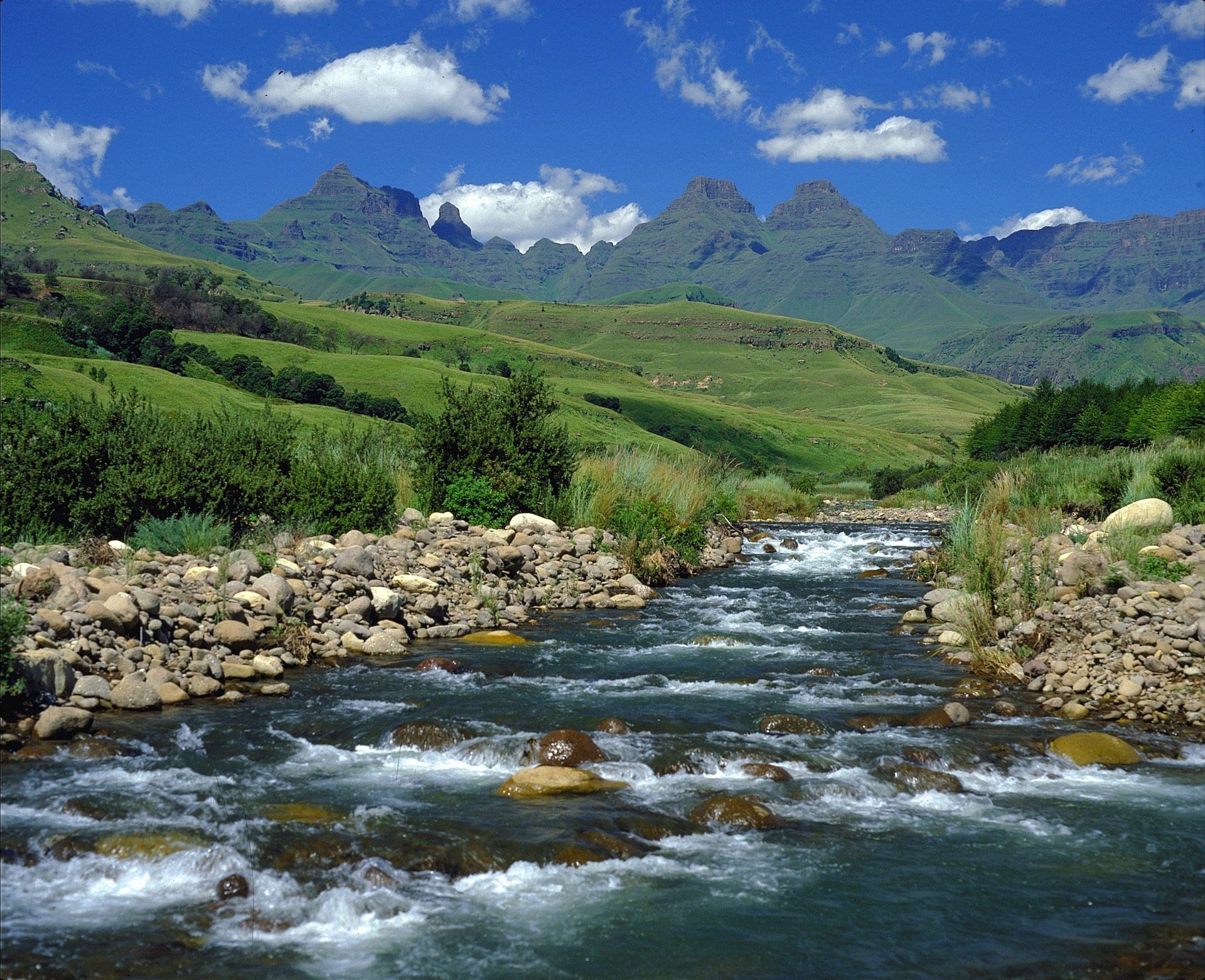
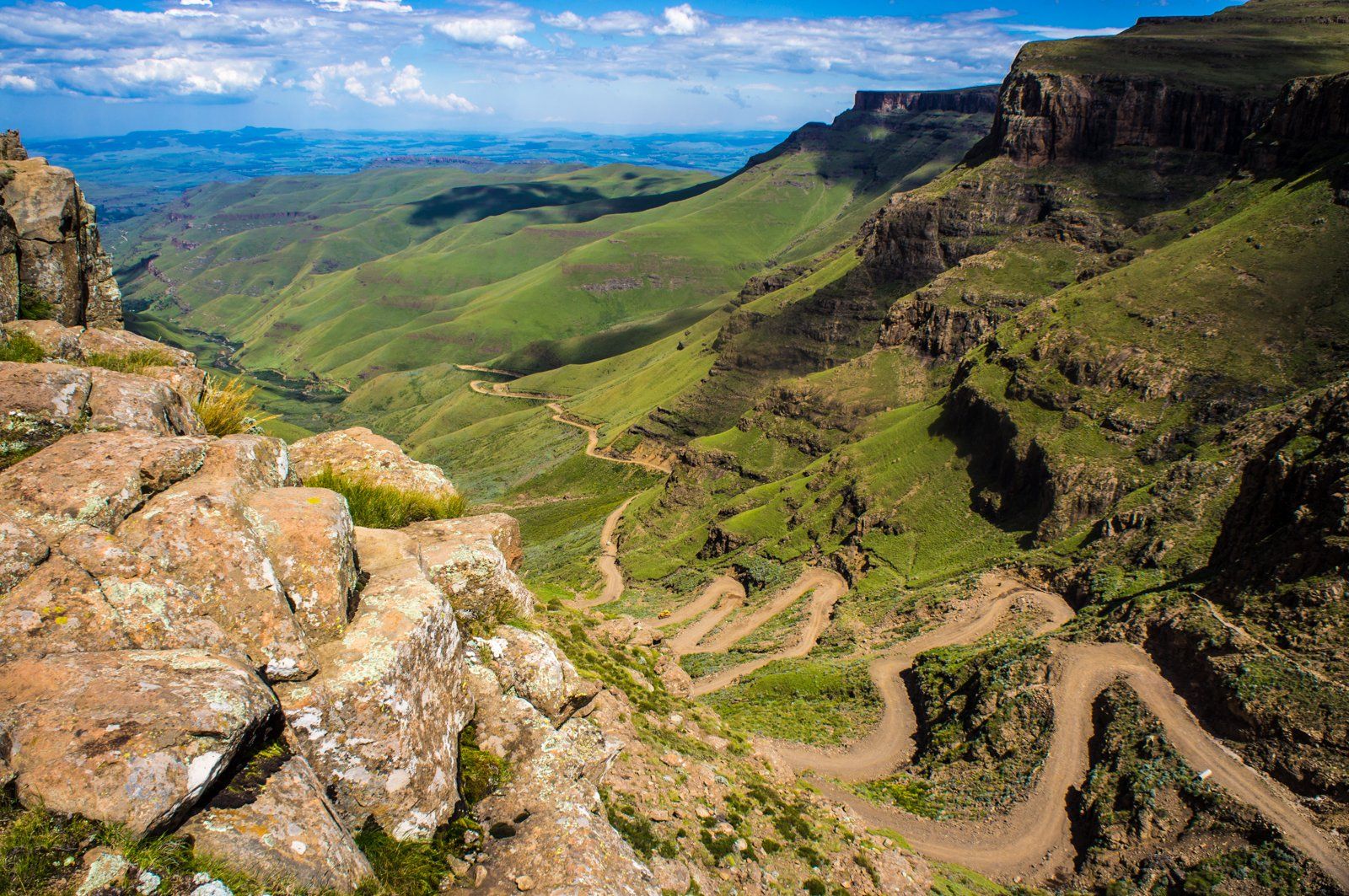
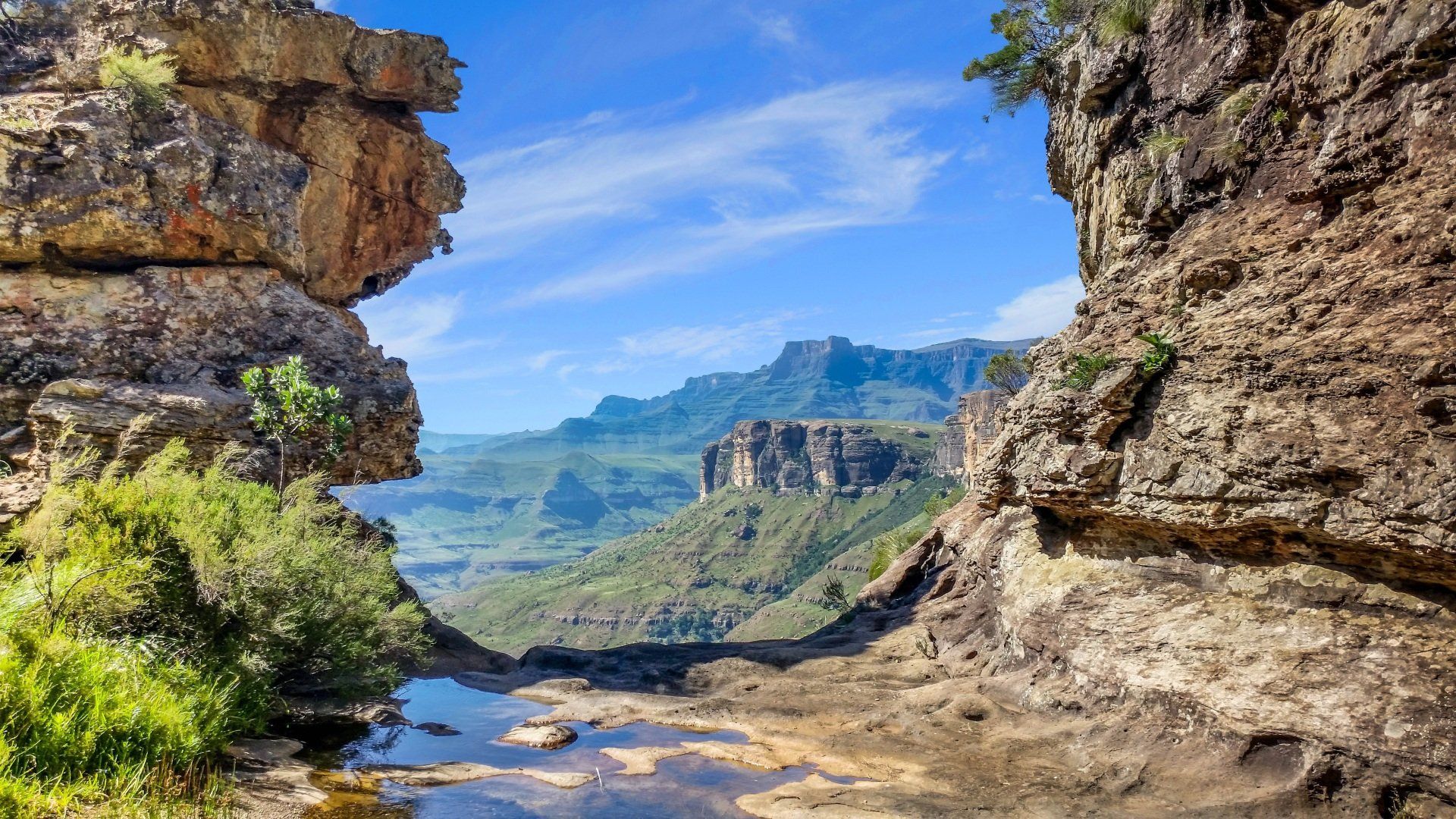
Ukhahlamba Drakensburg Park
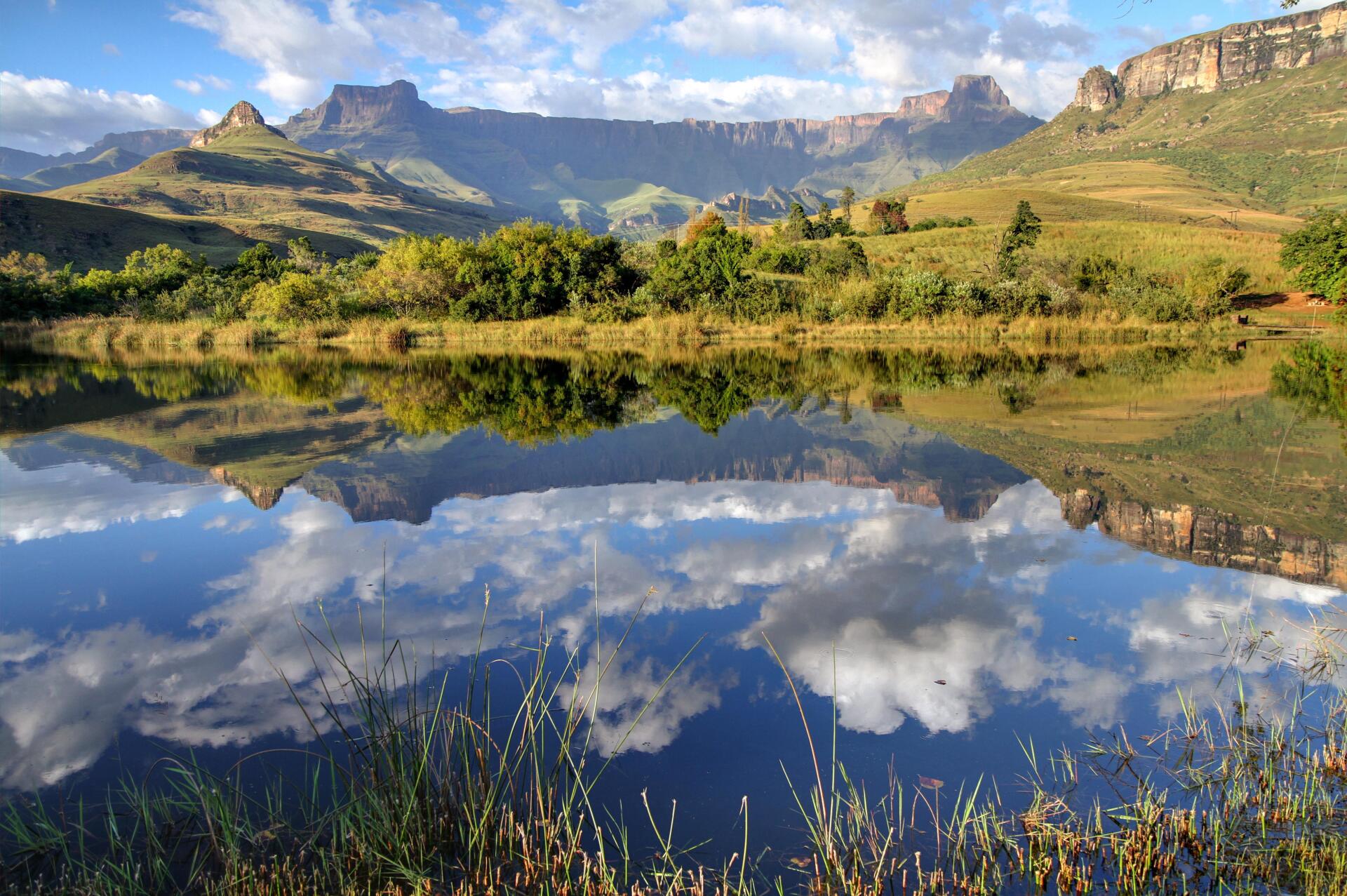
Standing atop the Ukhahlamba Drakensberg Park, surrounded by
craggy peaks,
sandstone cliffs,
cascading waterfalls,
crystal-clear streams,
rocky paths,
caves, and
sweeping grasslands, you truly feel as if the world lies at your feet.
Now a
World Heritage Site and one of South Africa’s leading eco-tourism destinations, the park offers a breathtaking landscape of towering mountains and pristine air — a place where you can savour the peaceful, uncluttered freedom that only vast open spaces can provide.
The mountains rise to over
3,000 metres, offering an astonishing range of natural wonders. Highlights include the
world-famous Amphitheatre at Royal Natal National Park, where an immense wall of rock seems to touch the sky, and the tranquil, scenic beauty of the southern Drakensberg at
Cobham and
Loteni. More than
500 San rock art sites decorate hidden coves throughout the range, offering a moving glimpse into the lives of a vanished people.
Visitors may also witness the bearded vulture feeding at Giant’s Castle, see the majestic eland antelope grazing the foothills, and experience the region’s remarkable floral variety. These unforgettable moments make Ukhahlamba Drakensberg Park a place you will carry with you long after you leave.
Hluhluwe-Imfolozi Park
Hluhluwe–Imfolozi Park is one of South Africa’s richest wildlife areas, home to the Big Five along with cheetah, hyena, African wild dog, diverse antelope species, and over 300 recorded bird species. Visitors can enjoy scenic picnic spots, self-guided viewpoints, and daily guided walks into Big Five territory.
Imfolozi, set in the heart of the Zulu Kingdom, carries deep cultural history—once the royal hunting grounds of King Shaka. It is also world-renowned for “Operation White Rhino,” a groundbreaking conservation mission that helped save the species.
The Hluhluwe section in the north features dramatic grassland hills and exceptional biodiversity. Activities include open-vehicle safaris, self-drive routes, guided walks, and peaceful boat cruises on the Hluhluwe Dam.
Battlefields
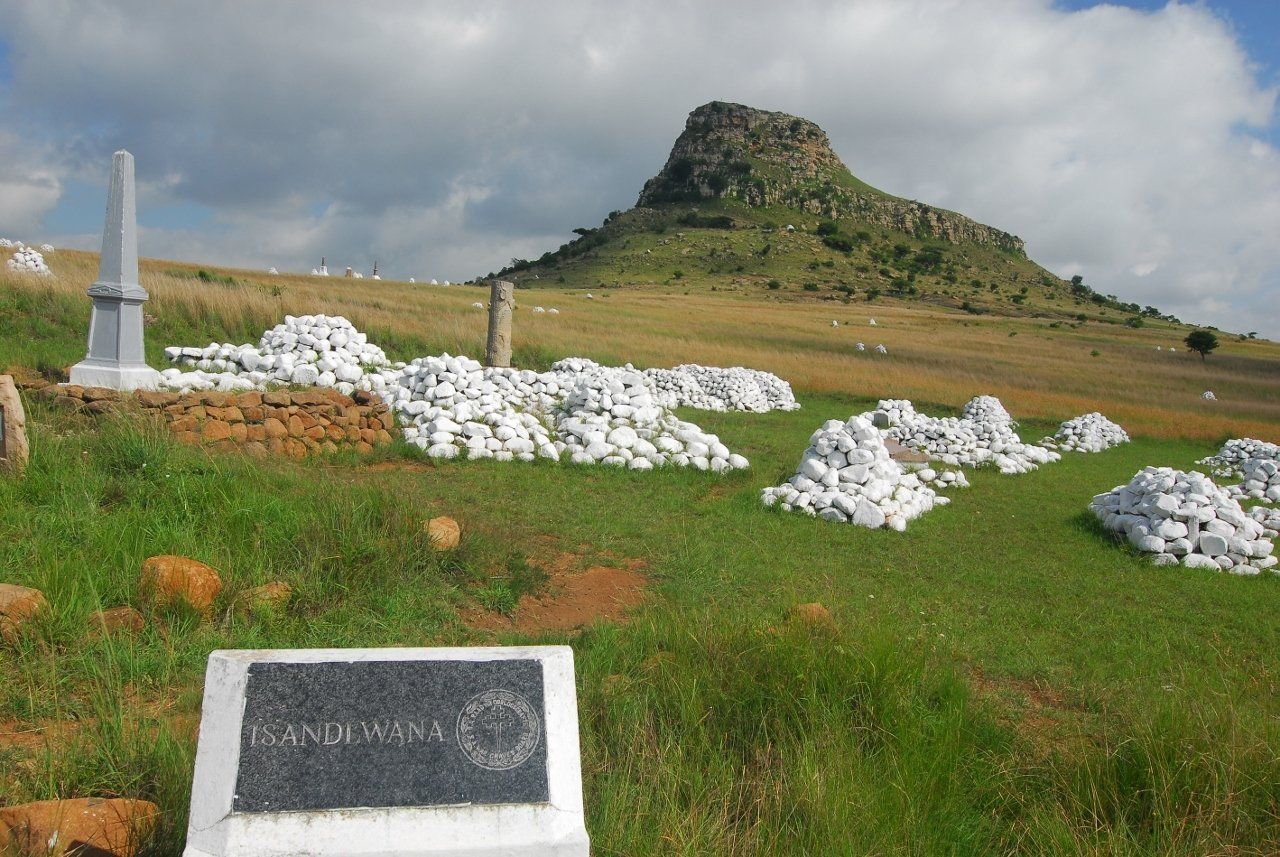
The KwaZulu-Natal Midlands are home to some of South Africa’s most important historic battlefields, spanning more than 200 years of conflict. This region witnessed clashes between the Voortrekkers and the Zulu nation, major defeats of the British army, and key moments in the Anglo-Boer Wars.
Near Dundee, visitors can explore several iconic sites:
•
Blood River (1838): The Voortrekkers’ victory over a Zulu army.
•
Isandlwana (1879): A British regiment destroyed by 25 000 Zulu warriors.
•
Rorke’s Drift (1879): One hundred British soldiers defended their post for 12 hours against massive Zulu forces.
•
Talana (1899): The first battle of the Anglo-Boer War.
These battlefields offer a powerful window into South Africa’s dramatic and complex past.
Elephant Coast
In the far north of KwaZulu-Natal lies the Elephant Coast — a 900,000-hectare wilderness of lakes, golden dunes, swamps and rich wildlife. Bordered by the Lubombo Mountains, Mozambique and the Indian Ocean, it features 21 unique ecosystems, including Lake St Lucia, Lake Sibayi, Tembe Elephant Park, Ndumo and Mkuzi. This region is one of southern Africa’s great wild areas, home to incredible birdlife, hippos, elephants and untouched natural beauty.
Isimangaliso Wetland Park
iSimangaliso Wetland Park is a World Heritage Site made up of 38,000 hectares of lakes, estuaries, forests, beaches and protected reserves stretching from south of the St Lucia Estuary to the Kosi Bay border. Sitting between subtropical and tropical climates, it is one of South Africa’s most diverse natural areas with five distinct ecosystems:
•
Marine system: warm Indian Ocean waters, Africa’s southernmost coral reefs, long beaches and deep underwater valleys.
•
Eastern coast: tall dunes, subtropical forest, grassland and swampland.
•
Lake system: includes the St Lucia estuary, Kosi Bay, and major freshwater lakes such as Sibaya and the Bhangazi lakes.
•
Mkuze & Umfolozi swamps: rich swamp forests with extensive reed and papyrus wetlands.
•
Western coastline: ancient coastal terraces and dry savannah forest.
Together these systems form a unique and fully interconnected wetland environment recognised internationally for its ecological importance.